

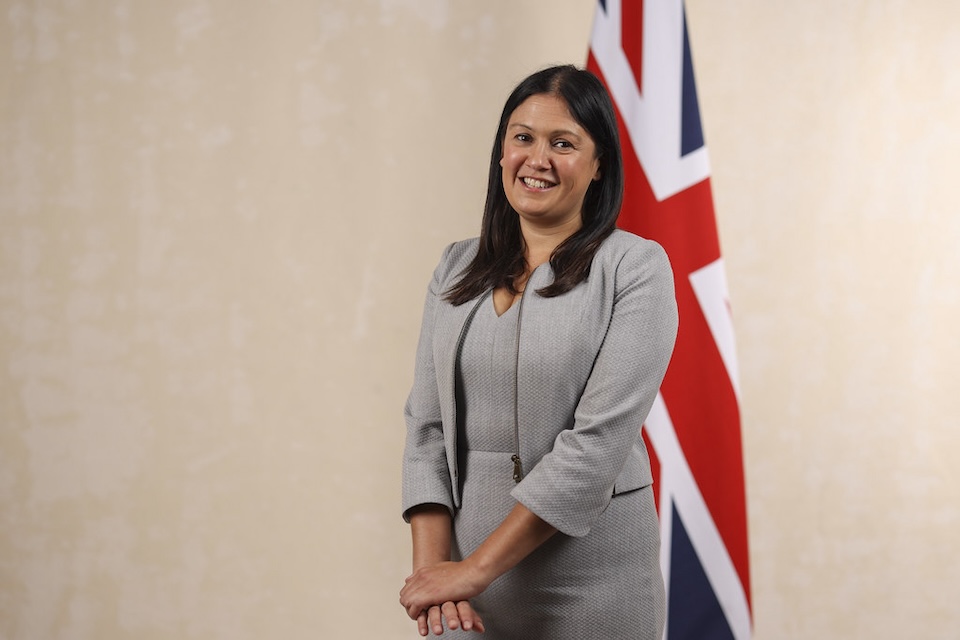
The Culture Secretary pledged to hold industry roundtables to discuss AI and copyright during a speech in which she announced that the Creative Industries Sector Plan would be published this month.
Speaking at the Deloitte and Enders Analysis’ Media & Telecoms 2025 & Beyond Conference in London, Lisa Nandy said the Sector Plan would “turbocharge the growth of creative industries right across the UK. To support film and TV clusters from Birmingham to Belfast. To tap into the huge potential for growth.
“And whilst we will have more to say on the sector plan shortly, that will put rocket boosters under the creative industries, I want to say now that this government recognises your value and we have your back.”
Seemingly referring to government plans to allow tech companies to use copyrighted material to train their AI models, the minister said: “The issue of AI and copyright needs to be properly considered and enforceable legislation drafted with the inclusion, involvement and experience of both creatives and technologists. And so as soon as the Data Bill is passed by Parliament, Peter [ Kyle, Secretary of State for the Department for Science, Innovation and Technology ] and I will begin a series of roundtables with representatives from across the creative industries to develop legislation, with both houses of Parliament given time to consider it before we proceed. We approach you with no preferred option in mind.”
The Culture Secretary outlined the difficulties and opportunities facing the screen sector, saying “broadcast viewing is down by a quarter, but on demand viewing is soaring” and shifts in “TV commissioning patterns have seen the UK become a world leader in high end, at the same time that smaller producers have seen the value of their commissions fall by a third and too many talented creatives left out of work.”
“We’re living through a revolution, but just as with the invention of the printing press and every revolution since, we don’t run from it, we adapt again, and we learn how to become stronger for it, in a new age.”
She issued a call for great unity within the sector, saying: “My commitment to you is an open and collaborative partnership with the government so that we can walk through this transition together. We will play our part, but we need you to play yours. We need more collaboration within your sector and especially between our public service broadcasters, to tackle these great social and economic challenges.”
And she underpinned the importance of regional screen clusters, saying: “We need you to take seriously the need to shift resources, opportunities and commissioning power to every nation and region. There is a principle that will run through our industrial strategy like a thread: economic growth, good jobs, skills and opportunities. Not just in one part of the country, but in every single nation and region, across our towns, villages and cities. So we need you to step up and do more, not just paying lip service to the need for regional and national content, but really embedding yourselves in those communities to make sure that those voices are heard, those stories are told. Because talent is everywhere, but opportunity is not.”
She pinpointed particularly the need to promote “high quality children’s content” to educate, inform, equip young people “for the world” and to inspire them. “We make great children’s content in the United Kingdom, but we don’t collectively promote it enough,” she explained.
“But as the sector evolves,” the minister added, “so must we, and we want a vibrant and sustainable media ecosystem with PSBs, streamers, indies, radio, TV, press, thriving across the UK, and not just individually, but collaborating together to invest in the skills, infrastructure and co-productions that we need, and when you do well, we won’t penalise you through new taxes and levies, but ensure that we have a regulatory framework that incentivises inward investment that creates opportunities for businesses, both big and small, and the UK talent to be showcased across the world.
“And also to understand how you can lead on this great transformation, thinking creatively about alternative ways to monetise your content and assets, and crucially, working together to move to where people are building on and developing more shared platforms and operations, like freely at radio player to help manage costs that make it easier for audiences to access your content.”
The Government has named creative industries as a key sector and priority for growth in its forthcoming Industrial Strategy. Nandy emphasised the importance of the screen sector’s commercial and cultural capital, saying: “Over the last decade, the creative industries have increased their output at more than one and a half times the rate of the rest of the economy.”
“Recently, I was in India and then Japan, and I couldn’t fail to be impressed by the esteem in which British media and creatives are held,” she added. “Millions of people around the world watch big budget dramas like ‘Doctor Who’ and ‘Bridgerton’, but they also watch a slew of other fantastic shows and formats from ‘Planet Earth’ to ‘Come Dine With Me’ and everything in between.”


